

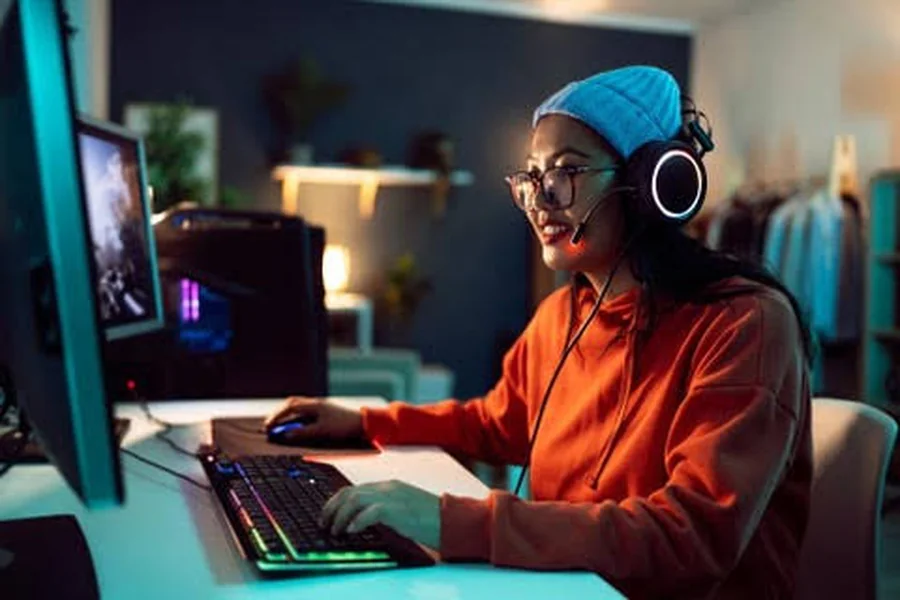
Online slot dana has transformed the way people experience entertainment. A game is no longer limited to a single player sitting in front of a screen. Today, players can enter shared digital environments, compete with opponents, cooperate with teammates, communicate with friends, and participate in global gaming communities.
The growth of high-speed internet, smartphones, gaming consoles, and advanced computers has made online gaming more accessible than ever. At the same time, new technologies are allowing developers to create larger, more interactive, and increasingly realistic digital worlds.
Understanding Online Gaming
Online gaming refers to video games that use an internet connection to provide multiplayer or connected features. Some games are designed entirely around online interaction, while others offer online modes alongside traditional single-player experiences.
Players can participate in quick matches, long-term adventures, competitive tournaments, or persistent virtual worlds. The flexibility of online gaming allows different types of players to find experiences that match their interests.
From Local Play to Global Competition
Before widespread internet access, multiplayer gaming was often limited to people in the same physical location. Friends might connect several controllers to one console or use a local network to play together.
Internet connectivity removed this limitation. Players could suddenly compete against people living hundreds or thousands of miles away.
This change introduced a global dimension to gaming and encouraged developers to build games around large communities.
What Makes Online Games Engaging?
Online games are often designed around continuous interaction. A match can change quickly because players make unexpected decisions.
The human element creates uncertainty and challenge. Players need to react to their opponents rather than simply follow predictable computer-controlled patterns.
Regular updates can also maintain interest. Developers can introduce new content, seasonal events, maps, characters, and challenges.
The Social Side of Gaming
Online gaming has developed into a social experience for many users. Players can communicate through voice chat, messaging systems, and community platforms.
Friends can play together even when they live in different cities or countries. Teams can also form around shared goals, creating communities that remain active for long periods.
For some players, the social connections surrounding a game are just as valuable as the gameplay itself.
Team-Based Gameplay
Cooperation is an important part of many online games. Players may have different abilities and responsibilities, requiring them to coordinate their actions.
Communication can make the difference between success and failure. Teams need to share information, develop strategies, and adapt when their plans are challenged.
This creates a gameplay experience where individual skill and group coordination work together.
Competitive Online Gaming
Competition provides another reason for the popularity of online games. Ranking systems allow players to measure their performance and compare themselves with others.
Players can work toward higher rankings by practicing and learning from their mistakes. Some spend considerable time developing specific techniques and studying advanced strategies.
This competitive environment has contributed to the growth of professional gaming.
The Rise of Esports
Esports has turned competitive gaming into an organized professional activity. Players compete in tournaments and leagues that can attract large online audiences.
Professional teams often include players, coaches, analysts, managers, and other specialists. Successful competitors need more than fast reactions; they also need discipline, teamwork, communication, and strategic awareness.
Esports has created a new entertainment industry around online gaming.
Mobile Gaming Expands the Market
The rise of smartphones has dramatically increased the number of people who can participate in online gaming.
Mobile devices are convenient and widely available. Players can enjoy games at home or while traveling without carrying dedicated gaming equipment.
Mobile titles also cover many genres, including action, strategy, sports, racing, puzzles, and role-playing games.
This variety has helped online gaming reach audiences that were previously less connected to traditional gaming platforms.
The Role of Gaming Communities
Communities are an important part of the online gaming experience. Players gather on forums, social networks, messaging platforms, and dedicated community spaces.
They exchange strategies, discuss updates, organize competitions, and help new players understand complicated features.
Community-created content can also add value to a game. Tutorials, guides, videos, and creative projects often become important resources for other players.
Gaming and Content Creation
Online gaming has created opportunities for a new generation of digital creators. Streamers can broadcast their gameplay live, while video creators can produce reviews, guides, challenges, and entertainment content.
Viewers can interact with creators through comments and live chats. This makes gaming content more interactive than traditional recorded entertainment.
For some creators, gaming has developed from a hobby into a full-time profession.
Technology Powering Online Gaming
The quality of online gaming depends heavily on technology. Modern processors and graphics hardware allow developers to create detailed virtual environments.
High-speed internet is particularly important for multiplayer games. A stable connection helps reduce delays and improves the responsiveness of gameplay.
Cloud computing also plays an important role by providing the infrastructure required to operate large online services.
Artificial Intelligence and Smarter Games
Artificial intelligence is becoming an increasingly important part of game development. Developers can use AI to create more advanced computer-controlled characters and improve certain development processes.
Future games may use AI to respond to individual players in more personalized ways. Characters could change their behavior based on player actions, while challenges could adapt to different skill levels.
These developments could make online worlds feel more dynamic.
Virtual Reality and Immersive Gaming
Virtual reality offers a different way to experience online games. Instead of interacting with a digital world through a traditional screen, players can use specialized equipment to experience a more immersive environment.
Multiplayer VR could allow users to meet inside virtual spaces and interact through digital avatars.
As VR technology becomes more advanced and affordable, it may become a more significant part of online gaming.
Positive Experiences From Gaming
Online gaming can offer several benefits when used responsibly. Cooperative games can encourage communication and teamwork, while strategy games may involve planning and problem-solving.
Creative games can give players opportunities to design environments, construct objects, and experiment with ideas.
Gaming can also provide a convenient source of relaxation and entertainment after completing daily responsibilities.
Challenges of Online Gaming
Despite its advantages, online gaming has potential challenges. Excessive gaming can reduce time available for sleep, exercise, studies, work, and personal relationships.
Online communities can also expose players to harassment, toxic behavior, cheating, and scams.
Players should understand how to use privacy controls, reporting systems, and blocking features to protect themselves from negative interactions.
Protecting Gaming Accounts
Account security is another important issue. Gaming accounts can contain personal information, payment details, and valuable digital content.
Players should use strong passwords and enable two-factor authentication whenever possible. They should also avoid clicking suspicious links or downloading unauthorized software.
Being cautious online can help prevent account theft and other security problems.
Creating Healthy Gaming Habits
A balanced gaming routine allows players to enjoy their favorite games without neglecting other areas of life.
Taking breaks during long sessions can reduce fatigue. Players should also make time for physical activity, sleep, education, work, family, and other hobbies.
Setting reasonable limits can help ensure that gaming remains an enjoyable activity rather than becoming a source of problems.
The Gaming Economy
Online gaming has become a major part of the global digital economy. Companies generate revenue through game purchases, subscriptions, advertisements, digital items, and additional content.
The industry also supports many careers, including programming, animation, design, marketing, community management, streaming, esports, and game testing.
As the market grows, new business models and career opportunities continue to emerge.
Cloud Gaming and Accessibility
Cloud gaming could make advanced games available to more people. Instead of depending entirely on powerful local hardware, cloud platforms can perform much of the processing remotely.
Players can then stream gameplay to compatible devices. Although internet speed and latency remain important, improvements in network infrastructure could make this approach increasingly practical.
The Future of Online Gaming
The future of online gaming will likely be shaped by several emerging technologies. Artificial intelligence could create more adaptive worlds, while cloud computing could expand access to high-quality games.
Virtual and augmented reality may introduce new forms of multiplayer interaction. Games could also become increasingly social, combining gameplay with digital events, communication, and creative activities.
Developers will need to balance technological innovation with privacy, security, fairness, and player well-being.
Conclusion
Online slot gratis saldo has become far more than a simple way to pass time. It is now a global ecosystem that connects people through competition, cooperation, communication, and creativity.
Advances in smartphones, internet connectivity, cloud technology, artificial intelligence, and immersive hardware are continuing to expand what games can offer.
Although responsible gaming and online safety remain essential, the future of online gaming is full of possibilities. As digital technology continues to evolve, online games will provide increasingly engaging ways for people to connect, compete, explore, and enjoy entertainment in a shared virtual world.
